
Mule in FiveM: spawn code, top speed and engine sound
The Maibatsu Mule spawns with mule. Below: its handling numbers explained and ranked against the Commercial class, ready Lua spawn code, the three forms of its hash, how to use its sound on an add-on car, and its mod kit, colour and light ids.
mule
- Name in game
- Mule
- Maker (in game)
- Maibatsu
- Class
- Commercial (20)
- Drive
- RWD, 5 gears
- Top-gear limit
- 120 km/h, 75 mph
- Weight
- 5,500 kg
- Seats
- 6
- Added in
- Base game (2013)
Generic commercial outline, not the real model
How the Mule drives, in numbers
- Rear-wheel drive: fDriveBiasFront is 0.0, so all of the drive force goes to the rear wheels. It has 5 forward gears.
- Top-gear limit: about 120 km/h (75 mph), from fInitialDriveMaxFlatVel 100 x 1.2. 19 of the 24 Commercial vehicles in the game files have a higher limit; the class median is 144 km/h.
- Drive force per tonne: 0.02 (fInitialDriveForce 0.11 on 5,500 kg). That is 4% more than the Commercial median of 0.019; it is a handling index for how hard it pulls for its weight, not horsepower.
- Brakes: fBrakeForce 0.25 with 60% of the braking on the front axle (class median 0.25).
- Grip: peak traction 1.5 and sliding traction 1.3 (fTractionCurveMax / Min). The gap of 0.2 is how much grip it loses once the tyres slide; 46% of the grip sits on the front axle.
- Weight: 5,500 kg, 21% lighter than the Commercial median of 7,000 kg.
Against all 24 Commercial vehicles in the game files
| handling.meta | Mule | Commercial median | Difference |
|---|---|---|---|
| fMass | 5,500 kg | 7,000 kg | -21% |
| fInitialDriveMaxFlatVel | 100 | 120 | -17% |
| fInitialDriveForce | 0.11 | 0.16 | -31% |
| nInitialDriveGears | 5 | 5 | same |
| fDriveBiasFront | 0 | 0 | same |
| fDriveInertia | 1 | 0.9 | +11% |
| fInitialDragCoeff | 6 | 8 | -25% |
| fBrakeForce | 0.25 | 0.25 | same |
| fBrakeBiasFront | 0.6 | 0.6 | same |
| fHandBrakeForce | 0.2 | 0.2 | same |
| fSteeringLock | 37° | 40° | -8% |
| fTractionCurveMax | 1.5 | 1.65 | -9% |
| fTractionCurveMin | 1.3 | 1.45 | -10% |
| fTractionCurveLateral | 16° | 17.8° | -10% |
| fTractionBiasFront | 0.46 | 0.475 | -3% |
| fLowSpeedTractionLossMult | 0 | 0 | same |
| fSuspensionForce | 1.4 | 1.4 | same |
| fSuspensionRaise | 0 | 0 | same |
| fAntiRollBarForce | 0.3 | 0.3 | same |
| fDeformationDamageMult | 0.8 | 0.7 | +14% |
| AIHandling | AVERAGE | handlingName MULE | |
Spawn the Mule in FiveM
Client script (spawns it where the player stands and seats them in it):
local model = `mule` -- 0x35ED670B
RequestModel(model)
while not HasModelLoaded(model) do Wait(0) end
local ped = PlayerPedId()
local pos = GetEntityCoords(ped)
local veh = CreateVehicle(model, pos.x, pos.y, pos.z, GetEntityHeading(ped), true, false)
SetPedIntoVehicle(ped, veh, -1)
SetModelAsNoLongerNeeded(model)
Server script (OneSync, the server owns the entity; admin only through the ACE restriction):
RegisterCommand('spawnmule', function(source)
    local ped = GetPlayerPed(source)
    local pos = GetEntityCoords(ped)
    local veh = CreateVehicleServerSetter(`mule`, 'automobile', pos.x, pos.y, pos.z, GetEntityHeading(ped))
    while not DoesEntityExist(veh) do Wait(0) end
    SetPedIntoVehicle(ped, veh, -1)
end, true)- vMenu: Vehicle Spawner, then Spawn Vehicle By Model Name, type
mule. - txAdmin: in-game menu, Spawn Vehicle, type
mule. - QBCore / ESX:
/car mulefor admins. - The second argument of
CreateVehicleServerSetteris the vehicle type; for the Mule it isautomobile. A wrong type makes the server entity fail.
An add-on car that does not appear is a different problem (stream folder, data_file lines, model name): see FiveM car not spawning. All vanilla codes in one table: FiveM spawn codes list.
Hashes
| Form | Value | Where you meet it |
|---|---|---|
| Hex | 0x35ED670B | CodeWalker, meta files, ymap entities |
| Unsigned | 904750859 | C#, JavaScript, databases that store unsigned |
| Signed (int32) | 904750859 | Lua GetEntityModel results, garage scripts that save the model as an int |
All three are the same number: the joaat (Jenkins one-at-a-time) hash of the lower case name, which is what GetHashKey('mule') and the Lua backtick form `mule` return.
Use the Mule engine sound on your car
The game has a car audio object named after this model, so one line in the vehicles.meta of an add-on car makes it use the Mule sound set:
<audioNameHash>mule</audioNameHash>- Engine audio type: classic. The older loop based engine audio, common on trucks and older vehicles.
- In our engine sound catalogue it is listed in the Diesel / heavy truck family.
- The audio object is the whole vehicle sound: engine, horn, doors and radio genre change together. How it sounds on your car also depends on that car's gears and top speed.
Want a recorded engine instead of a GTA one? FiveM engine sounds lists 102 packs and the Soundpack Maker builds the resource.
Mod kit, colours and lights
- 4 factory colour combinations in carvariations.meta.
- carvariations
lightSettings0: the headlight and taillight preset it reads from carcols. sirenSettings0 (no siren lights).- Plates: front and rear.
- Stock wheel category at the mod shop: Sport.
- Seat layout
LAYOUT_VAN_MULE, 6 seats.
vehicles.meta flags
In plain words: no boot.
All 8 flags
- FLAG_BIG
- FLAG_NO_BOOT
- FLAG_AVOID_TURNS
- FLAG_DELIVERY
- FLAG_EXTRAS_REQUIRE
- FLAG_PEDS_CAN_STAND_ON_TOP
- FLAG_BLOCK_FROM_ATTRACTOR_SCENARIO
- FLAG_INTERIOR_BLOCKED_BY_BOOT
Make an add-on car feel like the Mule
FiveMRides Vehicle Studio edits add-on car files in your browser (debadge, lights, seats, rims, tint, stance, exhaust, wraps and more) and gives you back a FiveM resource. Pair it with the sound line above to make your own car feel like this one. Your files, our tools; we never ship Rockstar models.
FiveMRides add-ons like this
Ready add-on cars from our shop for the same kind of vehicle. They install next to the vanilla Mule, they do not replace it.
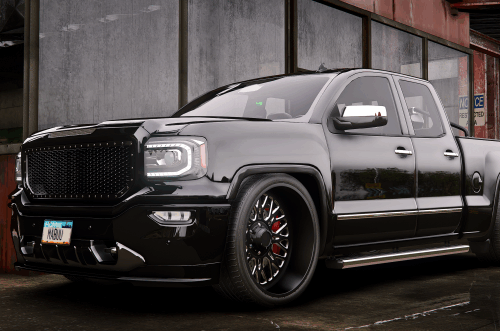 GMC Denali Widebody Original price was: $12.00.$8.99Current price is: $8.99.
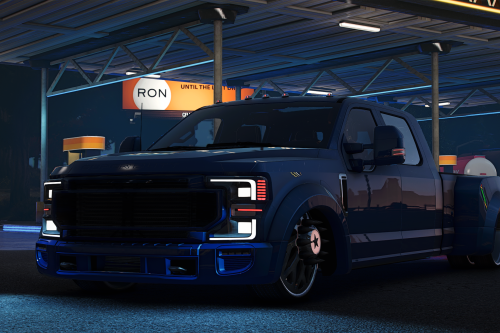 Ford F450 Bagged 2022 Original price was: $12.00.$9.99Current price is: $9.99.
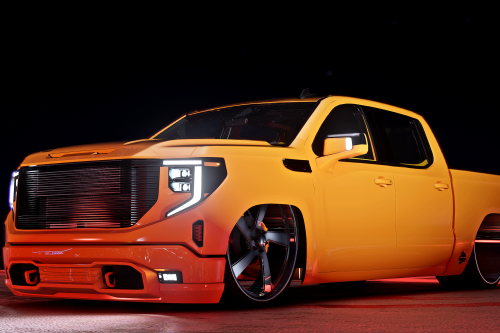 GMC Cworks Denali Sierra 2023 Original price was: $12.00.$8.99Current price is: $8.99.
Questions
What is the spawn code for the Mule in GTA 5 and FiveM?
The spawn code (model name) is mule. Its joaat hash is 0x35ED670B (904750859 as an unsigned number). Admin menus such as vMenu, txAdmin and the /car command of QBCore or ESX take the model name as it is.
How fast is the Mule in GTA 5?
Its handling gives a top-gear limit of about 120 km/h (75 mph): fInitialDriveMaxFlatVel 100 x 1.2, the value GetVehicleModelEstimatedMaxSpeed returns for ordinary handling values. Drag and upgrades change what a driver sees. It is RWD with 5 gears and weighs 5,500 kg.
Can I give an add-on car the Mule engine sound?
Yes. Put <audioNameHash>mule</audioNameHash> in the add-on car's vehicles.meta. The game then uses the Mule audio object, which is the whole vehicle sound: engine, horn, doors and radio genre change together.